
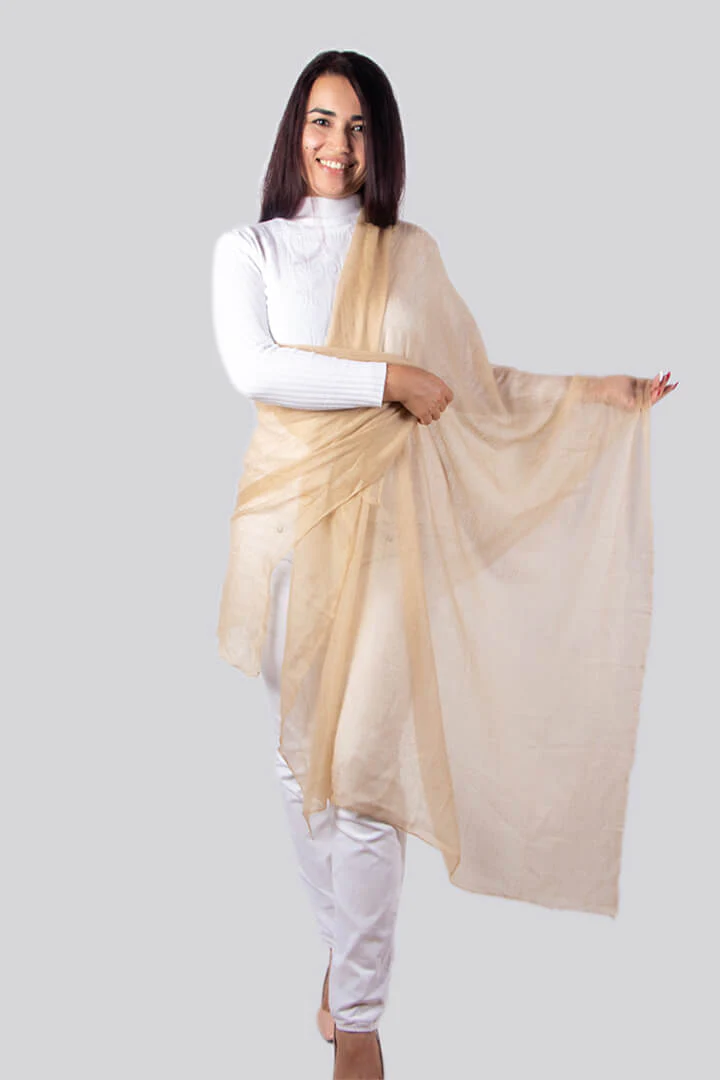
Cashmere Quality & Specifications
Most sourcing problems are specification problems. Two suppliers quoting “100% cashmere scarf” can be quoting products that feel nothing alike. This page explains the terms that determine what you actually receive.
The terms that matter
Micron
The diameter of the individual fibre, measured in microns. Finer fibre is softer and is graded higher. Cashmere is defined by fineness — it is what separates it from other goat hair. Ask your supplier what micron the yarn is; a supplier who cannot tell you is not close enough to their yarn source.
Fibre length
Longer fibres produce yarn that pills less and lasts longer. Softness alone is a poor proxy for quality: heavily washed short-fibre cashmere feels wonderful in the shop and pills within a season.
Ply
The number of yarn strands twisted together. Two-ply is stronger and more stable than single-ply at the same weight. Ply affects durability, drape and how the piece holds its shape.
Gauge (knitwear)
The number of needles per inch on the knitting machine — a lower gauge is a chunkier knit, a higher gauge is finer. Our partner workshops knit on hand-flat machines from 1.5 to 14 gauge, which covers everything from a heavy cable crewneck to a fine featherweight knit.
GSM and piece weight
GSM is grams per square metre. For finished accessories, total piece weight is usually the more practical figure, and it is the one we quote. A 100×200 cm featherlight cashmere shawl at 72–75 g and one at 140 g are different products entirely, whatever the label says.
Weave
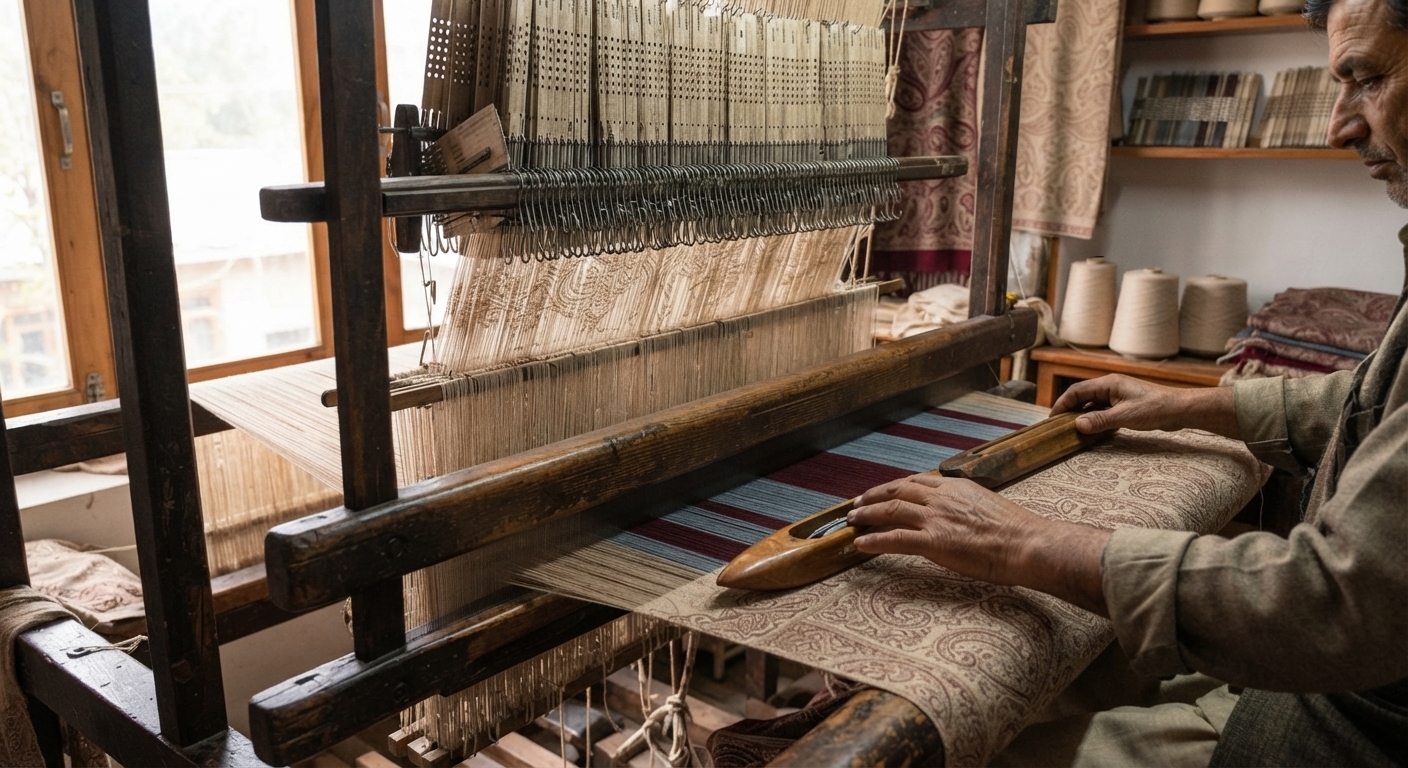
- Plain / handloom — the classic construction; weaving widths at our partner workshops run from 20 cm to 250 cm.
- Twill — diagonal structure, denser handle.
- Dobby — for checks, stripes and diamond patterns.
- Jacquard — for intricate custom patterns, woven rather than printed.
- Ikat — yarn dyed before weaving, producing the characteristic soft-edged pattern.
Why cashmere pills — and what is normal
Pilling happens when short fibre ends work loose and tangle at the surface. Some pilling on new cashmere is normal, particularly at friction points. Persistent heavy pilling usually points to short fibre length or over-aggressive finishing. It is not, by itself, evidence of a fake — but it is evidence of a quality grade.
Writing a specification we can produce against
A specification that avoids disputes contains all of the following:
| Field | Example |
|---|---|
| Composition | 100% cashmere / 70% cashmere 30% silk |
| Finished size | 100 × 200 cm, excluding fringe |
| Finished weight | 95 g ± tolerance |
| Construction | Handloom plain weave / 7 gauge hand-flat knit |
| Ply | 2-ply |
| Colour reference | Pantone number, or approved physical swatch |
| Finishing | Hand-twisted fringe, 6 cm |
| Labelling | Woven main label, printed care label, hang tag |
| Packing | Individual polybag, master carton quantity |
Our quality control
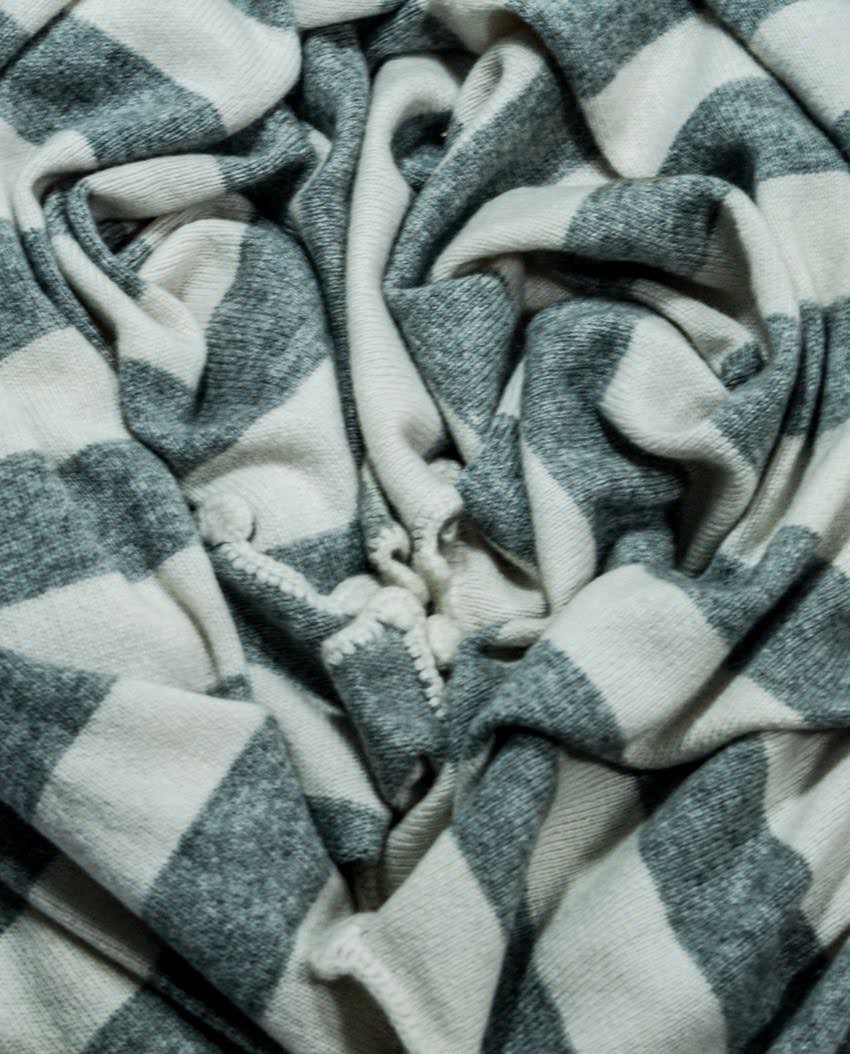
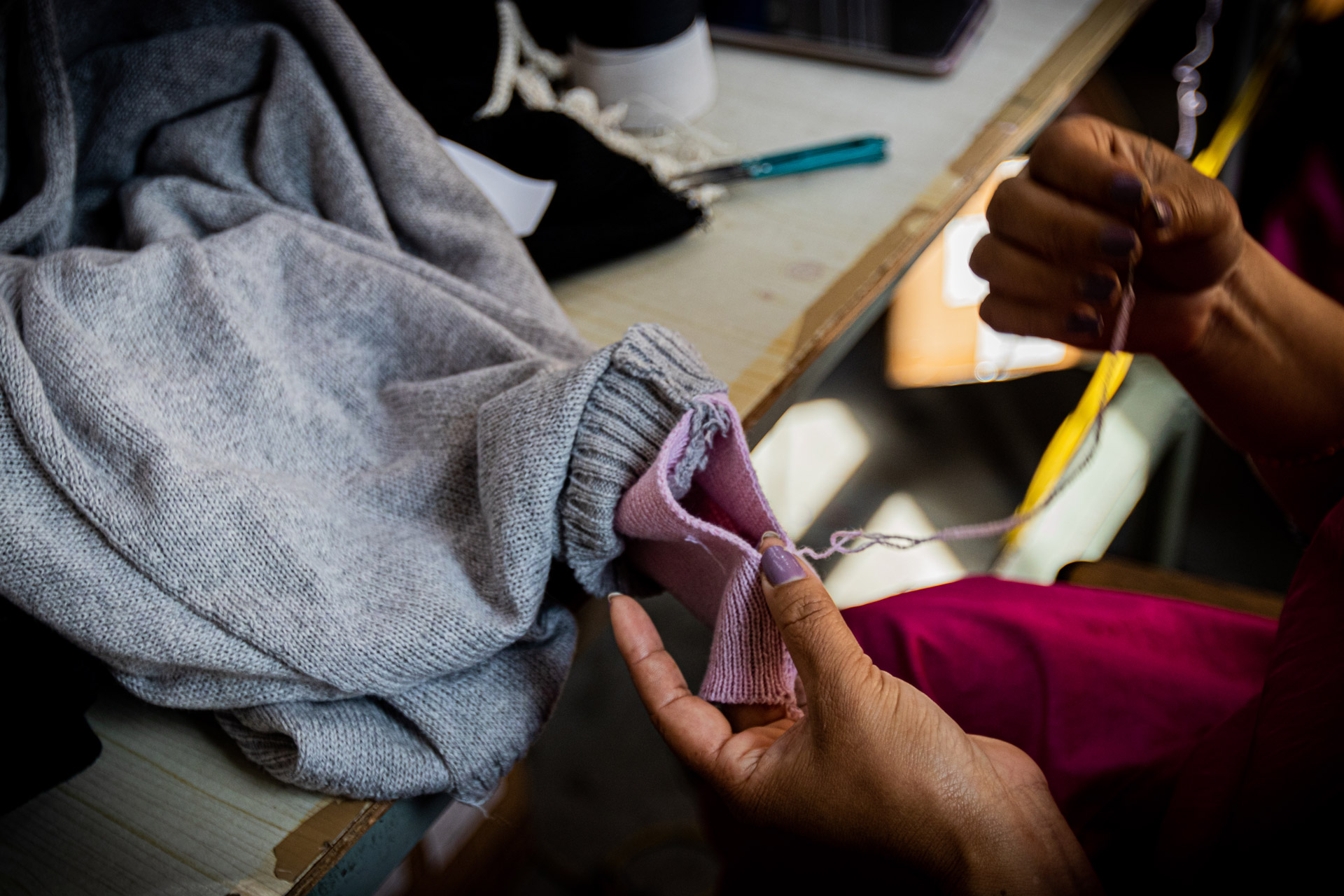
We check quality with our partner workshops at three points: incoming yarn, in-process during weaving or knitting, and at final packing before dispatch. Mending is done by hand, by the same workshop team that knits. A rejection rate of up to 5% of produced items is treated as acceptable.
Certification — stated accurately
Our yarn comes from certified supplier networks: OEKO-TEX® Standard 100 certified yarns, GOTS-aligned suppliers, Responsible Wool Standard certified yarns for wool blends, Sustainable Fibre Alliance engaged cashmere sources, and ISO 9001 certified mills. These certifications are held by our suppliers, not by Pashmina Studio. We say so plainly because a buyer who discovers the distinction later will reasonably wonder what else was overstated.
Comparing two supplier quotations
Two quotations for “100% cashmere scarf, 70 × 200 cm” can differ by a factor of two, and the cheaper one is not necessarily worse value — but you cannot tell without normalising them. Put both on the same basis before you compare:
| Check | What a difference means |
|---|---|
| Finished weight in grams | The single biggest driver of cost. A 95 g stole and a 140 g stole are different products, not different prices. |
| Composition, stated exactly | “Cashmere blend” is not 100% cashmere. Ask for the percentage split in writing. |
| Ply and gauge | Single-ply at the same weight is cheaper to make and wears differently. |
| Incoterm | FOB, EXW and CIF quotations are not comparable numbers until freight is added to the first two. |
| MOQ basis | Per order, per style, or per style and colour? The last is the most common and the most often misread. |
| What sampling costs, and whether it is credited | A “free sample” is usually priced into the unit rate somewhere. |
| Rejection tolerance | A supplier promising zero defects on handwork is describing something that does not exist. |
What to inspect before accepting a production run
- Check against the counter-sample, not against memory. Have the approved piece physically beside the delivery.
- Weigh a sample of pieces. Weight drift is the most common quiet substitution.
- Measure, after finishing. Confirm whether the quoted dimension included fringe.
- Assess colour under your retail lighting, not only in daylight, and across several pieces rather than one.
- Look at finishing — fringes, hems, seams, mending. This is where skill shows, and where rushed production shows first.
- Pull from several cartons, not the top of the first one.
A rejection rate of up to 5% of produced items is treated as acceptable in the trade, ours included. Beyond that, raise it — with photographs and the specific measurement that failed, which makes the conversation a technical one rather than an argument.
Further reading
Related
- Sampling — verifying quality before bulk
- How to tell if cashmere is real or fake
- Cashmere buyer guide
- Our process
Ask us a technical question
If you are writing a specification and want a second opinion on whether it is producible, send it over.