
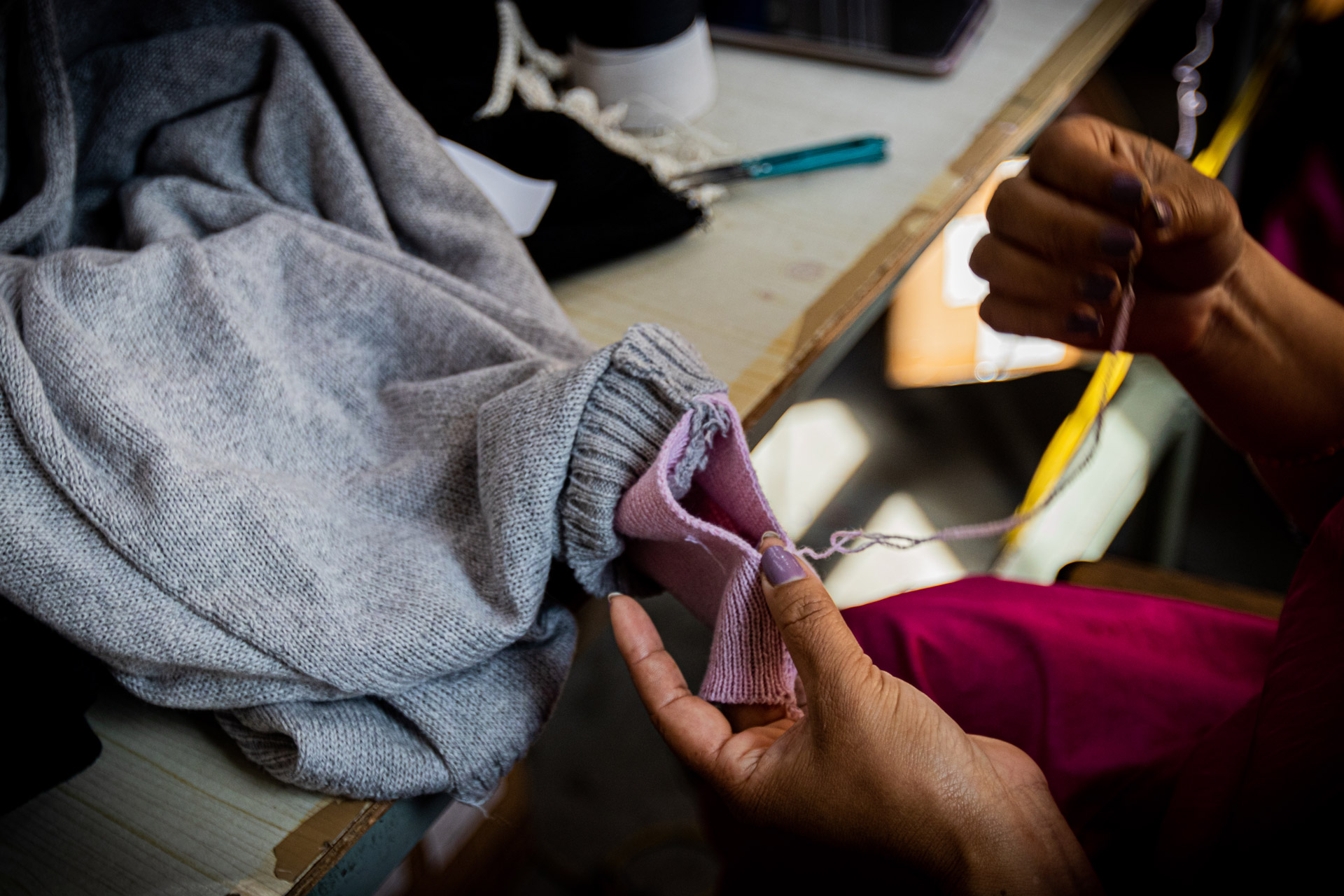
Cashmere Sampling
No buyer should place a first order with a supplier they have not handled product from. Sampling is how you find out whether our cashmere is what you want, before any money is committed to production.
Two ways to sample
1. Reference sample
For a style similar to something already in our range, we send an existing comparable piece for quality inspection. This is the low-cost, short-lead-time route and it is the one we recommend first. You get to handle the fibre, check the hand-feel, weight and finishing, and judge the workmanship — without waiting for a bespoke piece to be made.
2. New development sample
For an entirely new design, we produce a dedicated sample to your brief.
- Cost: 2× the unit production cost, payable 100% in advance.
- Lead time: approximately 30–45 days.
- Paid up front: sampling is charged at 2× the unit cost and settled 100% in advance, before development starts — so it is not an additional expense once you order.
A practical word on sampling strategy
Brands often ask to sample everything in a range. We would rather you did not. Sample only the few styles you are seriously considering — it keeps development fast and costs down, and a comparable reference piece will usually answer the quality question for the rest.
What to inspect when the sample arrives
- Hand-feel — softness, but also loft and recovery. Over-softened cashmere pills faster.
- Weight — check against the specified grams. Weight is the honest measure of how much fibre is actually in the piece.
- Dimensions — measure it. Confirm whether the quoted size is before or after finishing.
- Colour — assess under the lighting your customer will see it in, not only in daylight.
- Finishing — fringes, hems, seams, mending. This is where skill shows.
- Consistency — look across the whole piece, not just the corner in your hand.
Approving a sample
When you approve a sample, you are setting the standard that bulk production will be measured against. Put the approval in writing, keep a physical counter-sample, and record the specification: composition, size, weight, colour reference, construction and finishing. That record is what makes a repeat order reproducible next season.
A rejection rate of up to 5% of produced items is treated as acceptable in the trade, ours included. Dye lots also vary slightly between runs — this is inherent to dyeing natural fibre, not a defect, and it is the reason a recorded colour reference matters.
From sample to production
- Sample approved in writing, with specification recorded.
- Purchase order confirmed and 50% advance received.
- Bulk production, approximately 45–60 working days.
- Inspection at yarn, in-process and final packing stages, carried out with our partner workshops.
- Balance paid before dispatch; we handle Nepal export customs.
Five sampling mistakes worth avoiding
- Sampling the whole range. It is slow and expensive, and it rarely changes the decision. Sample the two or three styles you are serious about; take a reference piece for the rest.
- Approving on a screen. Colour cannot be judged from a photograph. Approve on a physical piece, under the lighting your customer will buy in.
- Approving verbally. If the approval is not in writing with the specification attached, there is nothing to measure bulk production against.
- Not keeping the counter-sample. Send one back, keep one. Label it. It is the reference for this season’s delivery and next season’s repeat.
- Leaving the sample until the season is tight. Development takes roughly 30–45 days before bulk production even starts. Sampling in October for a December delivery is not a schedule.
What we need from you to sample well
The more precisely you can describe the target, the closer the first sample lands. Useful: a reference product you already like, a target finished weight, a Pantone number or physical swatch, and the size you actually want rather than the size you saw. Unhelpful: “soft”, “luxury”, and “like the one on that website”.
If you do not know how to specify something, say so — it is a normal question and the answer takes a minute. The quality and specifications page sets out the fields we work from.
Further reading
Related
- Quality & specifications — what to write into your spec
- Private label — developing your own design
- Wholesale — ready-made styles
- Frequently asked questions
Request a sample
Tell us which style you are interested in, or describe what you want developed, and we will tell you which sampling route makes sense.