
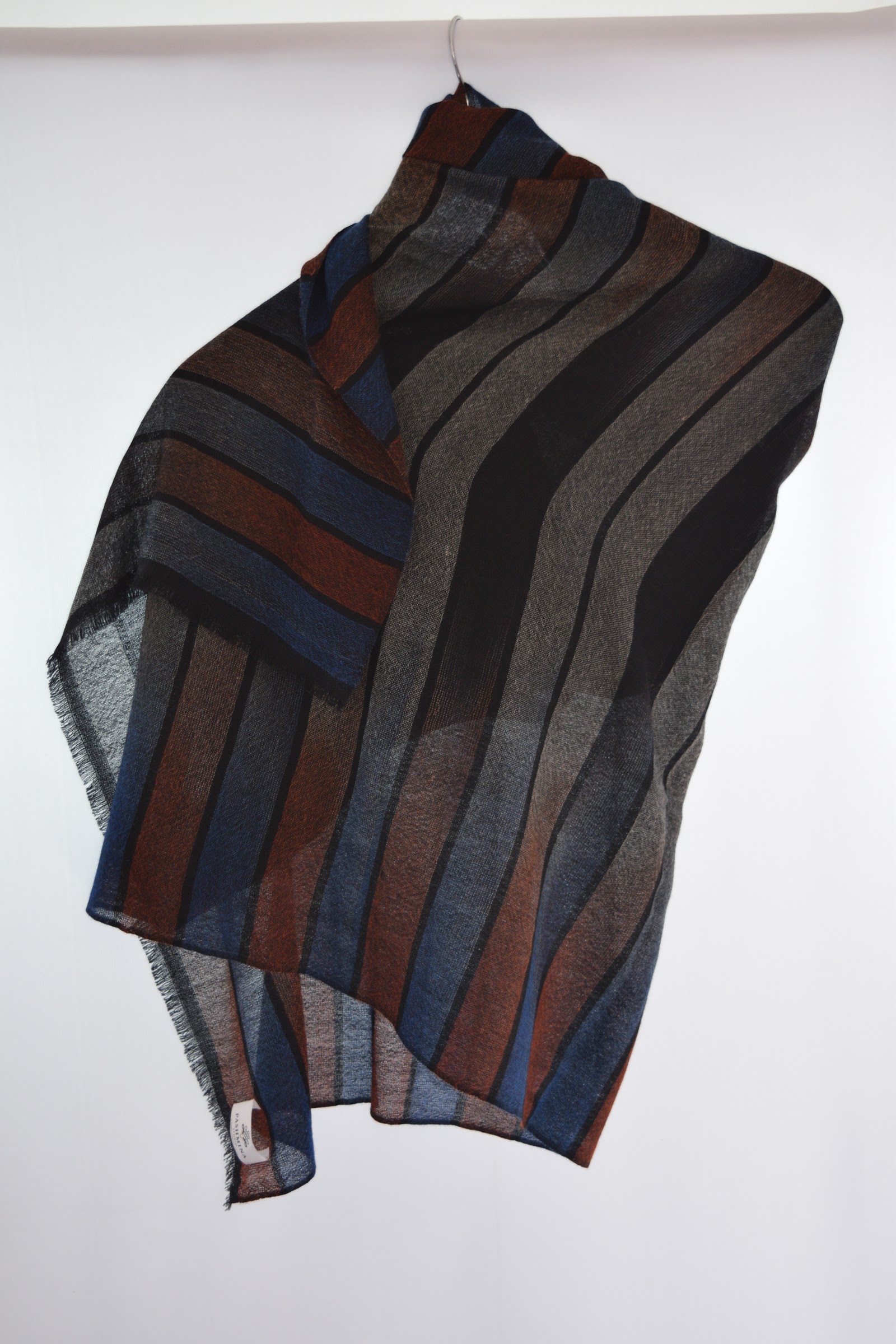
Wholesale Cashmere from Nepal
We supply cashmere to boutiques, retailers, distributors and importers who want genuine Himalayan product without committing to container quantities. Our standard minimum is 50 pieces per style and colour.
What we supply
| Category | Composition | Typical size | Minimum order |
|---|---|---|---|
| Woven stoles & shawls | 100% cashmere; cashmere/silk blends | 70×200 cm, 100×200 cm, 132×132 cm | 50 pcs per style and colour |
| Knitted scarves & shawls | 100% cashmere | 70×200 cm to 120×180 cm | 50 pcs per style and colour |
| Knitwear | 100% cashmere; wool/cashmere blends | XS–XXL | 50 pcs per style and colour |
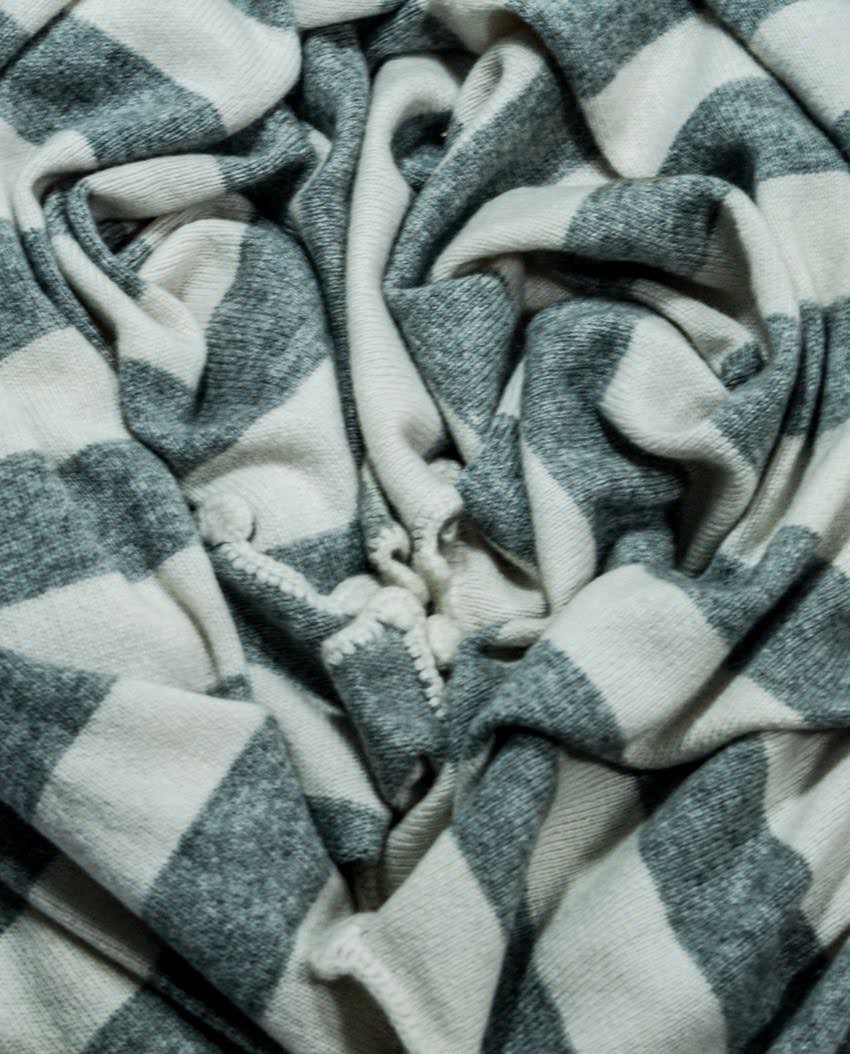
| Blankets & throws | 100% cashmere | 150×250 cm | Confirmed at quotation |
| Cushions | 70% cashmere / 30% silk | 46×46 cm, 51×66 cm | By project |
How a wholesale order works
- Choose. Pick styles from our catalogue, or send a reference piece or design brief.
- Confirm. We return a quotation with final pricing, minimum order and lead time for your sign-off.
- Verify quality. Review a comparable ready-made piece, or approve a paid sample for a new design.
- Order and ship. 50% advance to begin production, balance before dispatch. We handle Nepal export customs.
Terms at a glance
- Lead time: approximately 45–60 working days from confirmed order and advance payment.
- Payment: 50% on order placement, 50% before dispatch.
- Minimum order: 50 pieces per style and colour as standard. The exact minimum can depend on product type, yarn, construction and customisation, and is confirmed in writing at quotation.
- Sampling: 2× unit cost, payable 100% in advance and deductible from the bulk order under the agreed terms. Development samples take about 30–45 days.
- Pricing basis: quoted ex-works (EXW) or FOB Kathmandu, as agreed at quotation. Freight, duties and destination taxes are payable by the consignee.
- Freight: we handle Nepal export customs and can source freight quotes to suit your speed and budget.
- Tolerance: a rejection rate of up to 5% of produced items is treated as acceptable.
- Colour: any shade from our shade card, or matched to a Pantone reference or your own swatch.
Why buyers source from us
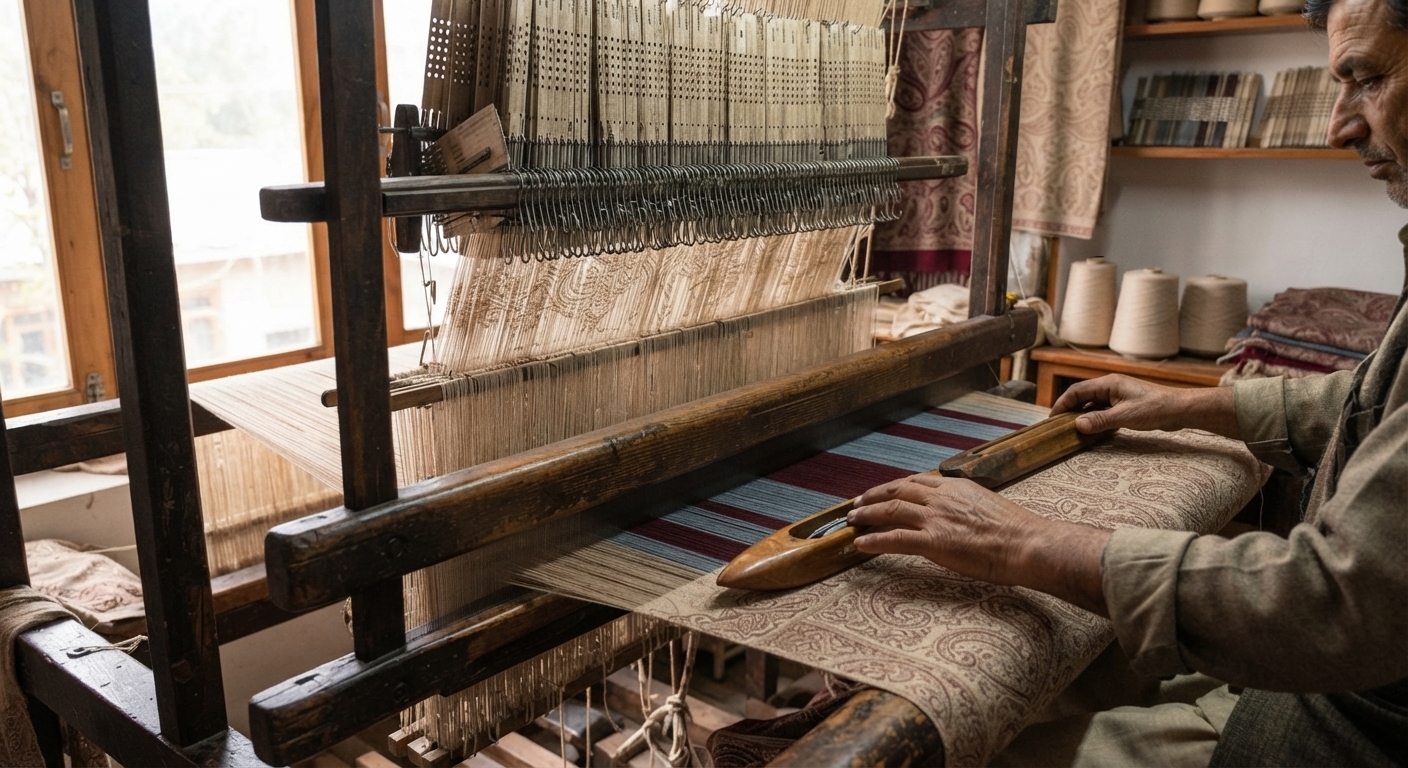
Pashmina Studio has worked in cashmere in Kathmandu since 1982 and is now run by the second generation of the family. We are cashmere specialists, not a factory: we develop, source and quality-check your order with trusted partner workshops and factories in the Kathmandu valley. You deal directly with the person managing your project — there is no account layer between your question and the answer.
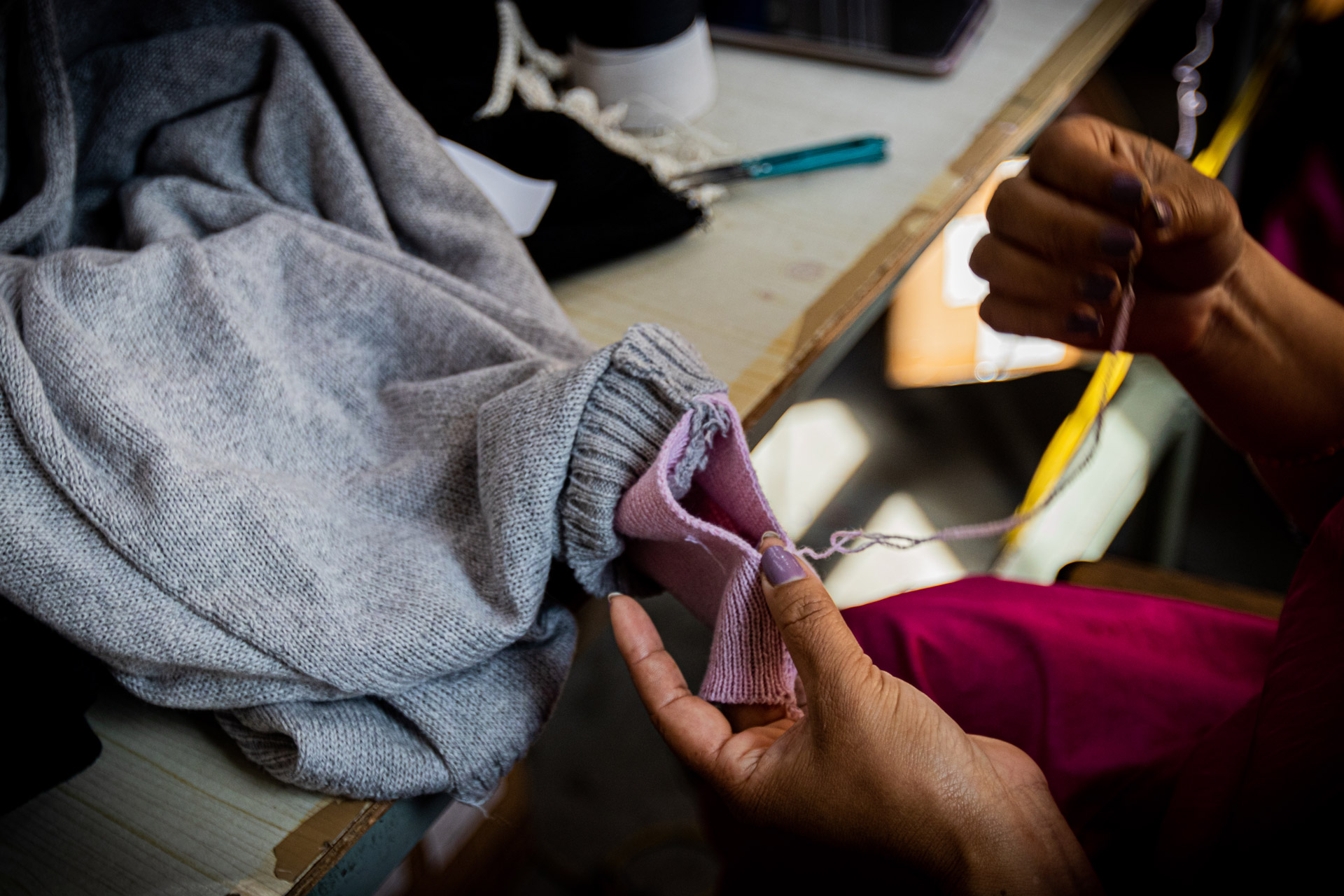
The knitting and mending teams at our partner workshops are made up largely of skilled women. Knitting is done on hand-flat machines from 1.5 to 14 gauge; weaving widths run from 20 cm up to 250 cm, with dobby looms for checks, stripes and diamond stoles and Jacquard for intricate custom patterns.
Quality and certification
We buy yarn from certified supplier networks — OEKO-TEX® Standard 100, GOTS-aligned, Responsible Wool Standard and Sustainable Fibre Alliance suppliers, and ISO 9001 mills. These certifications sit with our yarn suppliers rather than with Pashmina Studio. We check every order with our partner workshops at each stage, from yarn through to final packing. See Sustainability & Certification for the detail.
Shipping, duty and landed cost
Our quotations are ex-works or FOB Kathmandu. What you pay to get the goods onto your shelf is the quoted price plus freight, insurance, import duty, destination taxes and customs clearance. Buyers who compare suppliers on unit price alone are comparing the wrong number.
Air or sea. Scarves, stoles and knitwear are light and compact, so air freight is often proportionally cheap and gets you stock in days rather than weeks. Blankets and throws are bulky — on that category the freight decision materially changes the landed cost, so tell us your preference at quotation stage rather than after production.
Duty. What you pay depends on your destination country, the product’s HS classification, its fibre composition and the trade arrangements in force when you import. We deliberately do not publish a rate, because any number we printed would be wrong for most readers and out of date for the rest. Confirm the current position with your own customs authority or broker for your specific product and market. Be wary of any supplier who quotes you a universal duty figure without asking where you are.
Documentation. We handle Nepal export customs and export paperwork. Tell us which documents your import requires — a certificate of origin, a composition declaration, a packing list in a particular format — and we will confirm what we can issue before you commit.
Repeat orders and consistency
The first order is the experiment. The second is the business. A few things make the second one straightforward:
- Keep the approved counter-sample. Physically, in a bag, labelled. It is the reference we will produce against next season.
- Record the full specification — composition, finished size, finished weight, construction, ply, gauge, colour reference, finishing, labelling and packing. See quality and specifications for the fields that matter.
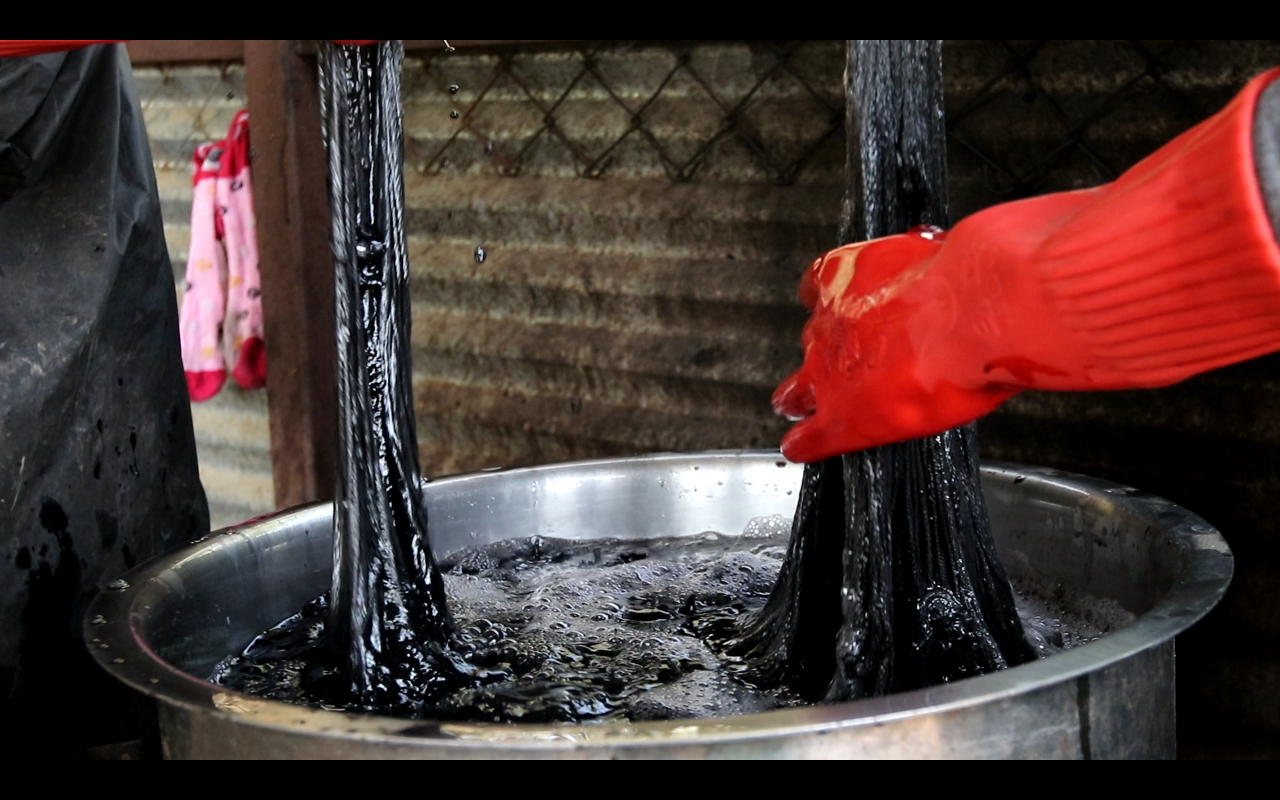
- Expect dye lots to vary slightly. Dyeing natural fibre is a chemical process on a biological material; small variation between runs is inherent, not a defect. Where a colour is critical, order the full season’s requirement in one lot.
- Tell us your season calendar in advance. Production slots are finite, and buyers who plan get protected capacity.
Who we work well with
We are a smaller, family-run cashmere specialist rather than a factory, and we are better suited to some buyers than others. We work well with brands and retailers who want one knowledgeable point of contact managing production with the workshops on their behalf, who value flexibility on colour and construction over the absolute lowest unit price, and whose order sizes sit between fifty and a few hundred pieces per style and colour. If you need tens of thousands of units on a fixed weekly schedule, a larger factory will serve you better, and we would rather say so now than six weeks into a project.
Further reading
Related
- Private label cashmere — your own label, colourways and packaging
- Sampling — how to check quality before you commit
- Quality & specifications — micron, GSM, ply, gauge explained
- Cashmere buyer guide
Start your cashmere project
Tell us the styles, quantities and delivery window you have in mind and we will come back with a specification and quotation.