
The women behind our cashmere
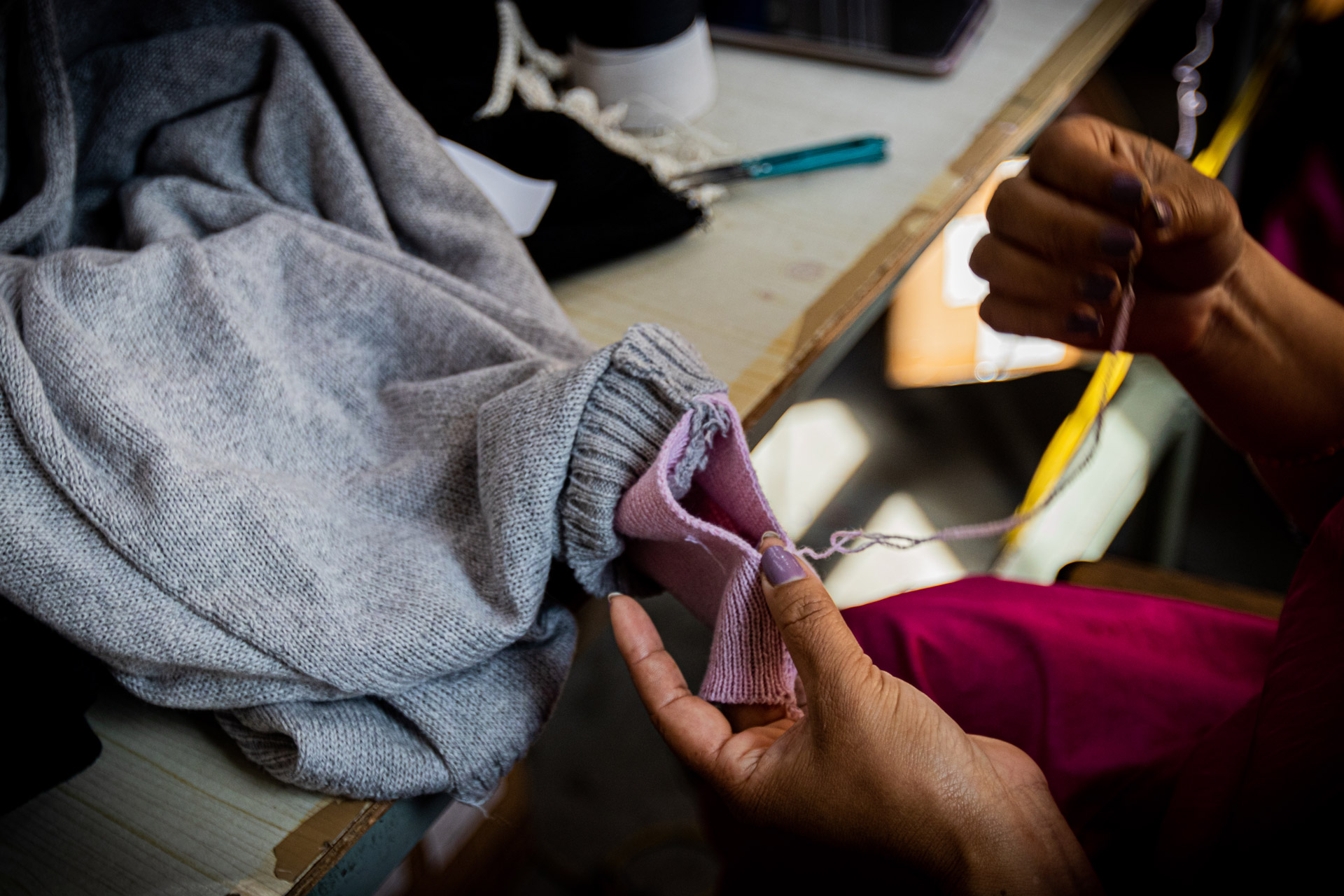
At the partner workshops that make our cashmere, the knitting and mending teams are made up mainly of skilled women. Mending — inspecting every piece by hand and repairing faults stitch by stitch — is the step that most decides whether finished cashmere passes inspection.
What the work actually is
Knitting and weaving leave small faults: a dropped stitch, a thick slub, a skipped thread. A mender finds each one under good light and repairs it by hand so the piece can be sold at first quality instead of being downgraded. It is slow, skilled, close work, and good menders are among the most valuable people in any cashmere workshop.
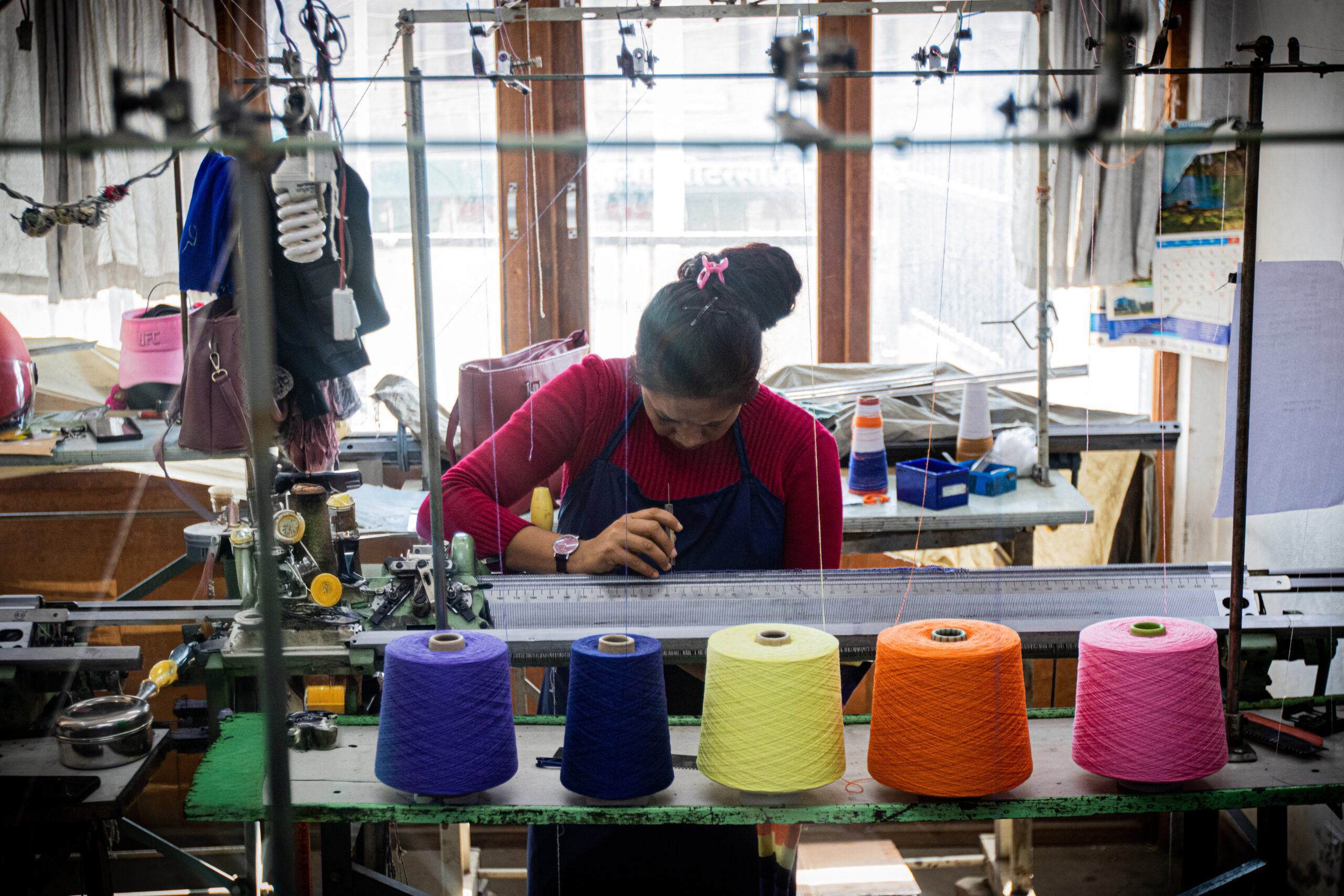
Knitters at our partner workshops turn out knitwear, knitted scarves and throws on hand-flat and machine knitting. Many of the artisans who work on our orders have worked with the family for years.
Skill, livelihood, craft, product
| What it means here | |
|---|---|
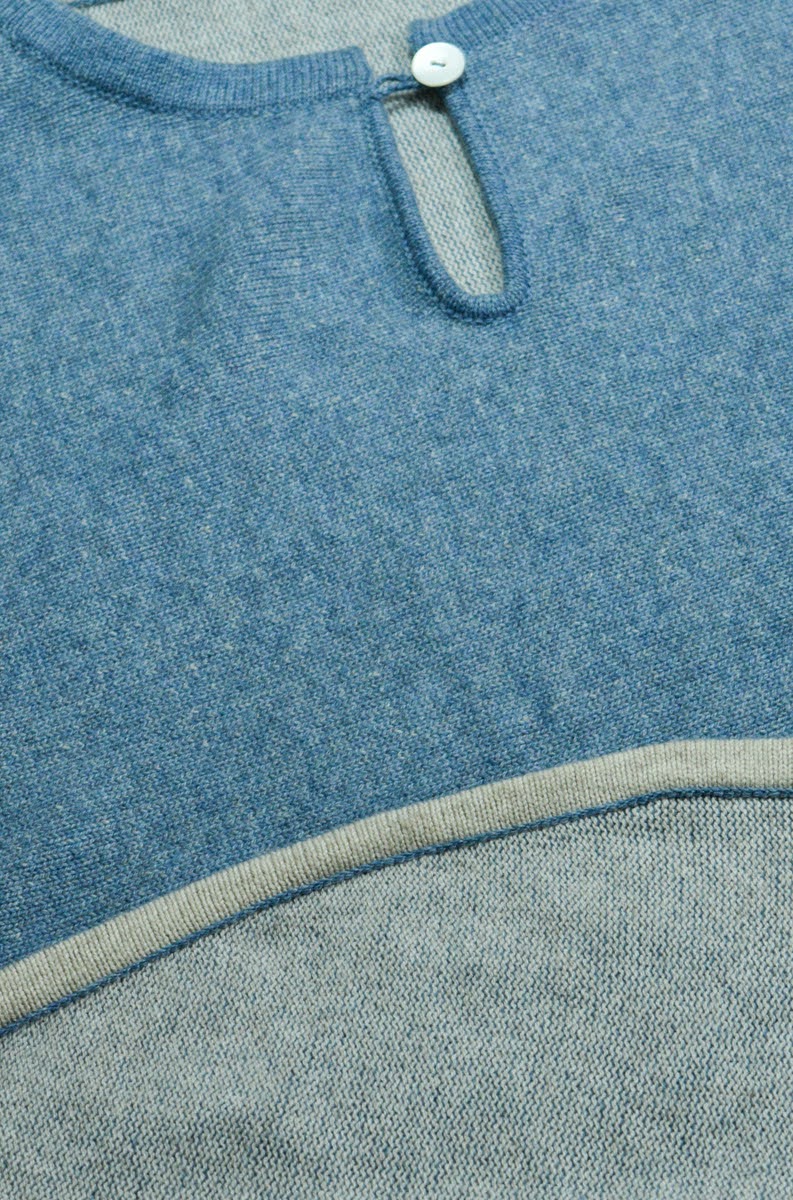
| Skill | Knitting, linking, finishing and hand mending, learned on the job and passed on between colleagues |
| Livelihood | Skilled, paid work in the Kathmandu valley |
| Craft | Hand inspection of every piece rather than spot-checking a few |
| Product | Faults repaired rather than hidden, fewer seconds |
What we do and do not claim
We are a cashmere specialist, not a factory owner, so we describe the partner workshops we work with, from our own experience of them. We do not publish workforce statistics for Nepal’s textile industry as a whole, and we do not use the people who work with us as marketing in place of quality. If your brand wants to tell a people story on its own label, ask us for the specifics you need and we will tell you what we can stand behind.
Related: how cashmere is made in Nepal · what Made in Nepal really means · quality and specifications · our story.
Buyer questions
Who makes Pashmina Studio cashmere?
Trusted partner workshops and factories in and around the Kathmandu valley: weavers, knitters, dyers, finishers and menders the family has worked with for years. Knitting and mending are done mainly by women. Pashmina Studio develops each product and checks quality during production.
What does a cashmere mender do?
Inspects each finished piece by hand and repairs knitting or weaving faults stitch by stitch, so the piece can be sold as first quality.
Can I see where my order is made?
Ask us when you get in touch and we will tell you what is possible for your visit or your project.
Work with our team
Standard minimum: 50 pieces per style and colour. Production takes 45–60 working days after sample approval. Sampling is charged at 2× unit cost and deducted from the bulk order under the agreed terms.